
On Justice for the People with Judge Milian, a small claims dispute over a ruined suit and a broken bottle of wine quickly revealed itself to be something far more calculated. Evan Brooks filed suit against Lena Martinez, his former girlfriend, seeking $899 in damages.
The claim centered on a bottle of wine allegedly spilled on Brooks during a dinner at the restaurant where Martinez worked. Brooks sought reimbursement for the cost of his suit, valued at approximately $450, and the price of the wine, a $450 bottle of Merlot he said he was wrongfully charged for after it was knocked over.
Brooks and Martinez had dated for nearly one year before she ended the relationship approximately five days before their one-year anniversary. He testified that the breakup came without much warning and that he took it badly. The dinner in question took place on what would have been their anniversary.
Brooks testified that his date for the evening had chosen the restaurant independently. However, under questioning from Judge Milian, he acknowledged that he was fully aware his ex-girlfriend worked there and had not discouraged the choice. He further admitted that upon arrival, he specifically requested to be seated in Martinez’s section.

Martinez testified that she was caught off guard when Brooks walked in with another woman. She stated that she recognized the situation for what it was and chose to remain professional rather than remove herself from the table. She later learned, after the incident had concluded, that Brooks had deliberately requested her section.
The dispute over the wine arose when Brooks’s date asked Martinez to take a photograph of the two of them. Brooks testified that Martinez reached directly for his phone without first asking, and that he instinctively lunged to intercept it. He said that as he grabbed the phone, Martinez’s arm jolted backward and knocked the bottle from the table, shattering it on the floor.
Martinez offered a different account. She testified that the phone was sitting on the edge of the table and she moved naturally to pick it up.
According to her testimony, it was Brooks who reached in with a sudden motion to snatch the phone back, and in doing so, his own hand knocked the bottle onto himself before it fell to the floor.
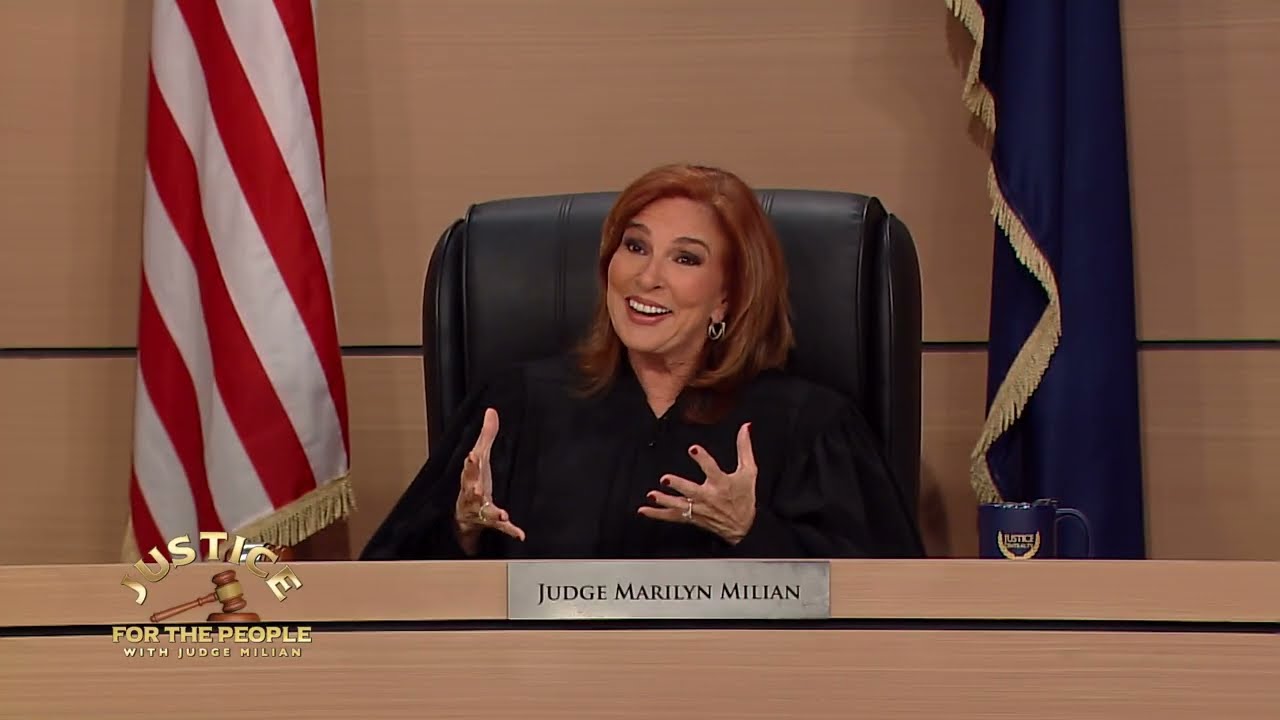
Judge Milian noted that both accounts were plausible given the circumstances and that there was no independent means of determining whose arm made contact with the bottle. She observed that the core facts of the case were not seriously in dispute — only the question of physical causation.
The judge addressed Brooks directly, pointing out that he was the individual who had set the entire situation in motion. She noted that he had brought a date to his ex-girlfriend’s place of work, requested her section, ordered the specific bottle of Merlot that Martinez had previously recommended to him, and then grabbed for the phone when his date asked for a photo to be taken.
Judge Milian explained that under the preponderance of evidence standard applicable to the case, Brooks bore the burden of proving that his version of events was more likely true than Martinez’s. She concluded that he had not met that burden, citing his own conduct as the decisive factor in her analysis.

The court ruled in favor of the defendant. Martinez was not held liable for the cost of the suit or the bottle of wine, and Brooks’s claim of $899 was denied in full. Judge Milian also noted that the suit itself had been purchased by Martinez as a gift for a prior occasion during their relationship.
With the ruling entered, Brooks left the courtroom without any award. Martinez, having successfully defended the claim, faced no financial obligation arising from the incident. The outcome effectively closed the matter between the two former partners, at least in a legal sense.
The case serves as a procedural reminder that negligence claims require the complaining party to demonstrate that the other side’s conduct was the proximate cause of the harm.
Where a plaintiff’s own actions contribute materially to the chain of events, courts may find that the burden of proof has not been satisfied. Watch the full ruling in the video below.